


The Romanian Grassland Society is pleased to invite you to the 24th European Grassland Federation Symposium that will be held from 6 to 8 September 2027 in Iasi, Romania.
The subject of the symposium is traditional grasslands between abandonment and intensification.
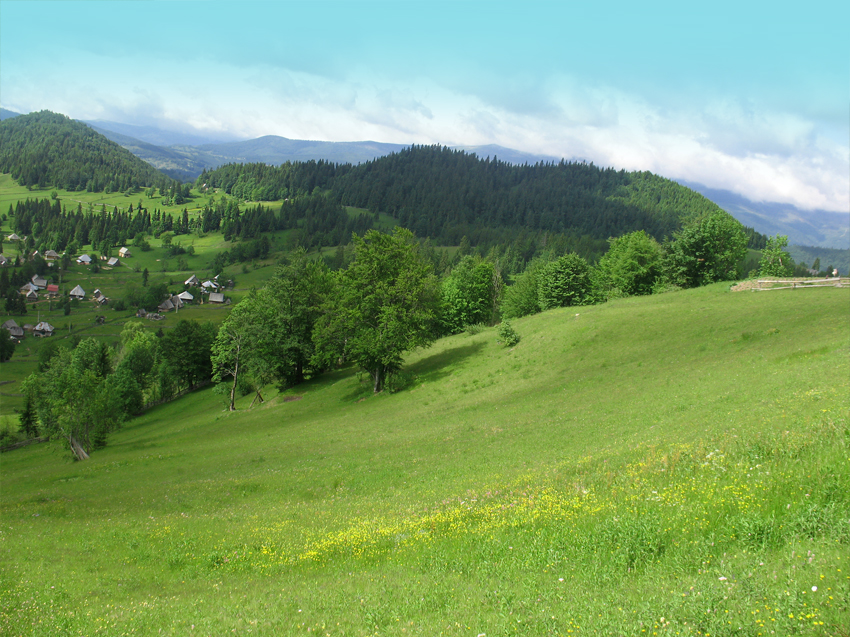
Traditional grasslands are ecosystems shaped and maintained mainly by long-term human activity, used for extensive grazing by domestic herbivores and mowing, without the application of mineral fertilizers or intensive agricultural work. They are characterized by high biodiversity and fulfil an important socio-cultural and historical role, many of these agricultural landscapes having been shaped over several centuries. In addition to their biological and agronomic value, traditional grasslands provide essential ecosystem services, including carbon sequestration, protection of soil against erosion, maintenance of natural fertility, provision of refuges for pollinators and other organisms, and confer a high aesthetic value on the rural landscape.
Traditional grassland areas have declined significantly in recent decades, particularly in Western and Central Europe, as a result of intensified agriculture (high-dose fertilization, conversion to arable land, partial or total replacement of native species), abandonment of traditional practices (grazing and mowing), rural depopulation, migration to urban areas, and natural succession in the absence of management.
The EGF Symposium 2027 will cover various topics that refer to factors contributing to grassland abandonment of traditional grasslands, starting from agricultural policies, the decrease in interest in animal husbandry in certain regions, the aging of the active population in agriculture, climate change, etc.
The symposium will also explore sustainable approaches to increasing the productivity of traditional grasslands while preserving their biodiversity, so as to contribute to the sustainable development of rural areas.
The information you need for the EGF Symposium 2027 on traditional grasslands between abandonment and intensification can be accessed by clicking on the links below.
Scientific Information: Includes details of the conference committees, themes, programme, and guidelines for authors and presentations.
General Information: Includes details of the mid- and post-symposium tours, the accompanying delegate programme and the symposium dinner.
Visit this page to register for the symposium and/or to book on to the post symposium tour.
Venue: Information about the symposium venue (Iasi University of life sciences)
Travel information: Details of how to get to the venue and accommodation options
Partners: How to get involved with EGF 2027 as a sponsor
| Event | Date |
| Abstracts submission opens | 1 Sept 2026 |
| Abstract deadline | 17 Jan 2027 |
| Paper deadline | 14 Mar 2027 |
| Early Bird registration | 21 May 2027 |
| Symposium | 6-8 Sept 2027 |


EGF Symposium 2027
Queries relating to the EGF 2027 Symposium can be directed to the RGS office using the details below.
Romanian Grassland Society
Cluj-Napoca, Cluj County, Romania
3-5, Calea Mănăștur Street, Room 46
Zip code: 400372
E-mail: sropaj@yahoo.com
Website: https://sropaj.ro

